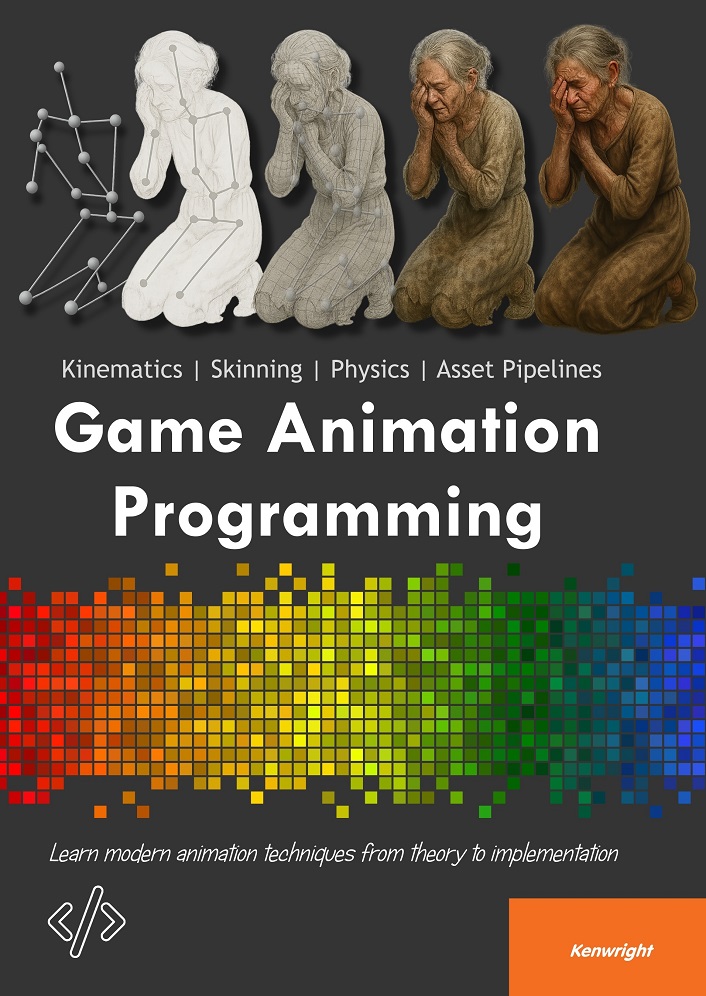
An authoritative dive into Game Animation, "Game Animation Programming" illuminates its impact on the computational thinking. A must-read for forward-thinking minds.
Each chapter builds momentum, weaving together case studies, frameworks, and forward-thinking analysis that elevate the discourse. This book provides a structured yet imaginative approach to Inverse Kinematics, bridging theory with practical application. By combining visionary ideas with grounded examples, "Game Animation Programming" empowers readers to engage deeply with the future of Programming. Readers will appreciate the book’s clarity, especially in unpacking complex ideas around Game Animation without sacrificing technical rigor. The book’s tone is both authoritative and accessible, making it a standout resource in the realm of Game Animation.
This book doesn’t just inform—it challenges assumptions and introduces a bold, refreshing framework for thinking differently.
Yes! I found the visual summaries at the end of each chapter incredibly helpful for reviewing and retaining key ideas.
February 9, 2026
The interactive prompts and exercises made me feel like I was being personally mentored by the author.
This book didn’t just inform—it inspired me to rethink how I approach Ragdoll Physics in my own work.
February 22, 2026I found myself nodding along constantly—so many moments of 'aha!' throughout the book.
February 13, 2026
The depth of research is impressive, yet the writing remains clear and engaging throughout. A rare balance.
Same here. It’s rare to find a book that’s both intellectually rigorous and emotionally engaging—this one nails it.
February 20, 2026Stay updated with the latest in tech literature
The Old Higue’s Son Sometimes when I lie down, I feel sad and lonely. I think how my momma must have hollered when they were beating her with th...
Read MoreTayari Jones’s novel, Kin, is available now from Alfred A. Knopf, so we asked her a few questions about writers block, writing advice, favorite book...
Read MoreEnhance your reading and learning experience
Scan headings, summaries, and key terms before deep reading to build context.
Quiz yourself regularly instead of rereading. It strengthens memory and understanding.
Explain concepts to someone else. Teaching reinforces your own understanding.
Create acronyms or visual cues to remember complex information more easily.
Study in 25-minute focused intervals with 5-minute breaks to maintain energy and concentration.
Visualize concepts with diagrams to connect ideas and improve comprehension.
Sarah Johnson
Professional ReviewerI had the same experience. The practical exercises really helped solidify the concepts and made the learning process feel hands-on.
February 13, 2026